Location: If your goal is to stay right in the heart of Nana’s nightlife, it is hard to find a more extreme location than the Nana Hotel. The property is directly on Soi 4, practically opposite the entrance to Nana Plaza: just cross the street and you are there. This puts you right in the middle of Sukhumvit’s Nana area, surrounded by bars, restaurants, massage shops, street stalls, convenience stores, and venues open at almost any hour. Nana BTS station is also only a few minutes away on foot. The location is undoubtedly one of the main reasons to choose this hotel, but you need to know exactly what you are getting into: there is virtually no separation between the hotel and the nightlife of the surrounding area. Nana Hotel is not simply close to the action on Soi 4, it is almost part of it.
I was actually already quite familiar with the property before deciding to spend a night there. Over the years, I had walked into the lobby several times, although only to use the restrooms late at night. Nana Hotel has a rather unusual layout and sees such a constant flow of people that, if you walk into the lobby confidently and head straight for the restroom, chances are no one will ask you any questions. It is a little trick a fellow traveler taught me almost ten years ago during a night of drinking on the classic plastic chairs set out along the roadside among Bangkok’s street stalls. Now you know it too, and sooner or later it might come in handy.
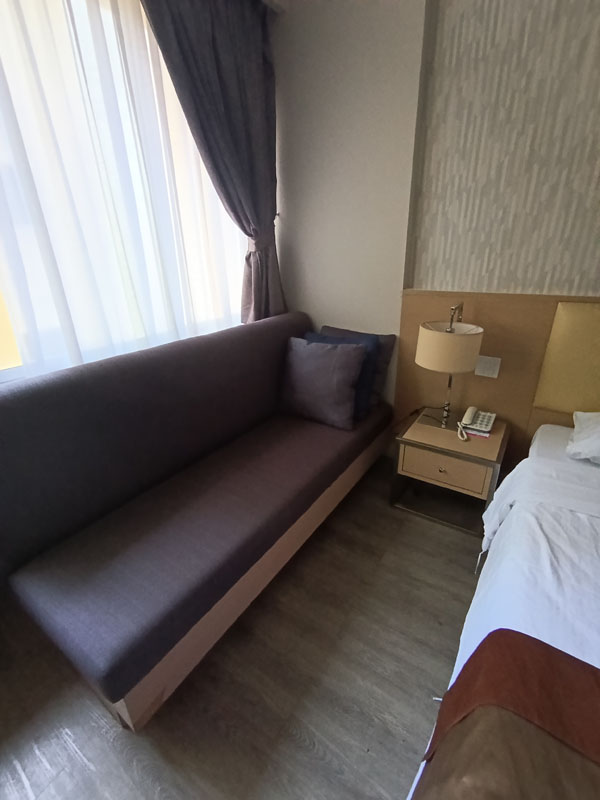
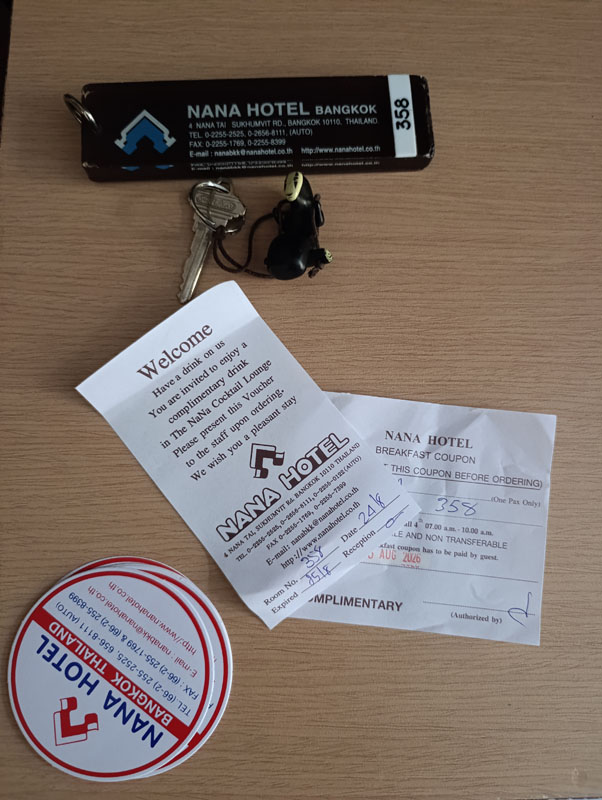
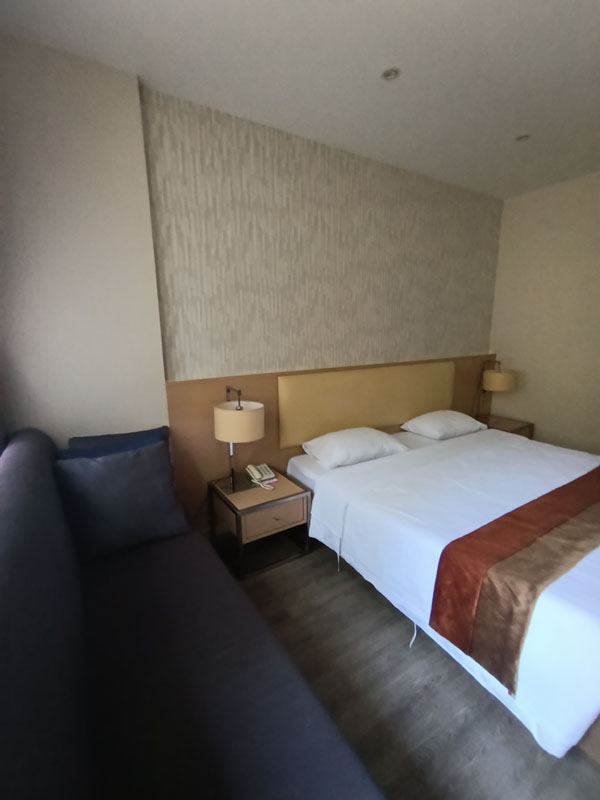
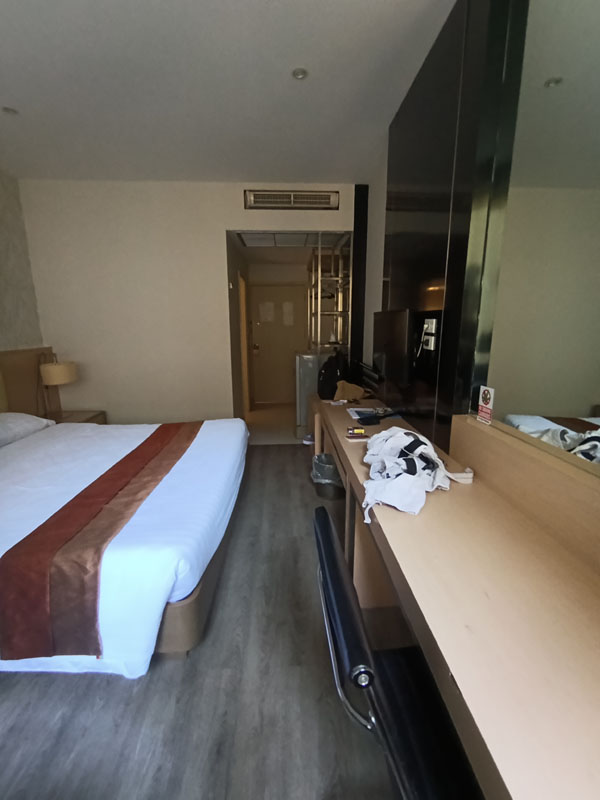
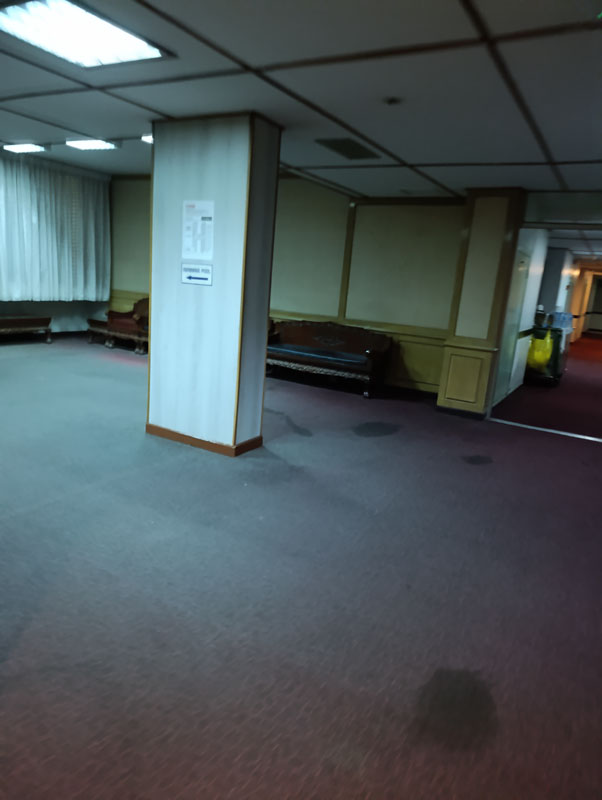
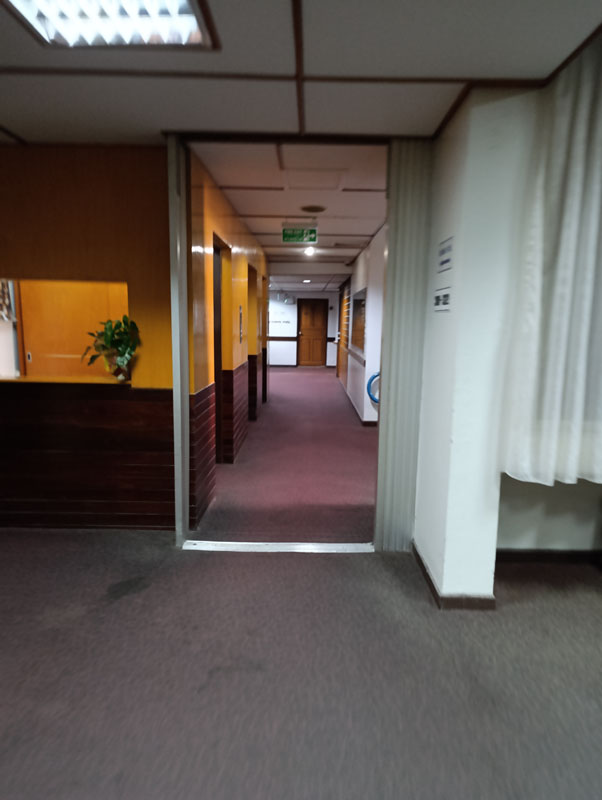
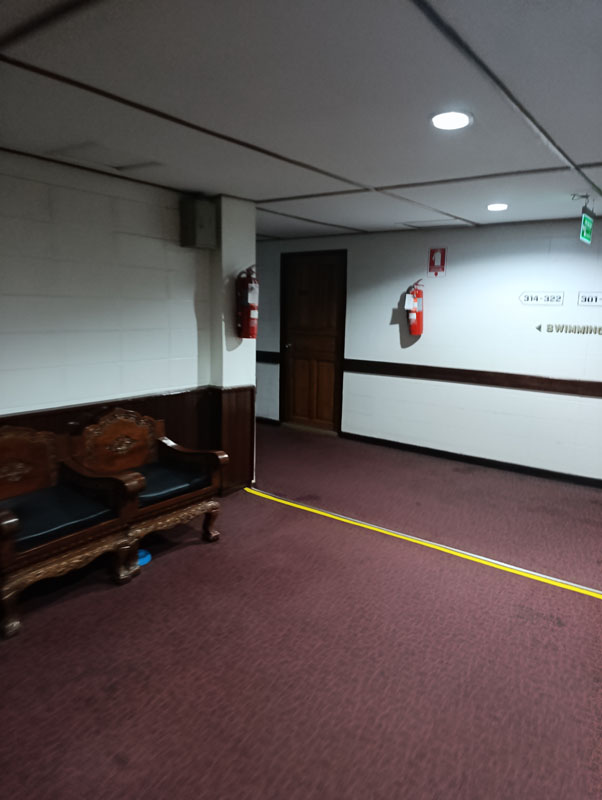
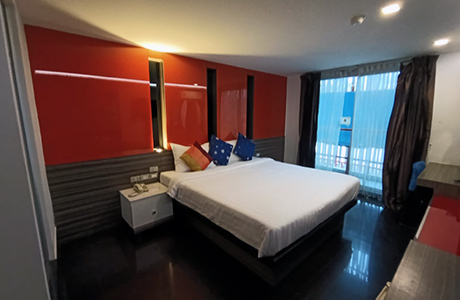
Room: Nana Hotel is a piece of neighborhood history and, for better or worse, the moment you step into the room you can feel just how heavily that history weighs on the place. The property is very dated. The furniture, corridors, doors, and many of the details seem to belong to another era, and the rooms still use traditional metal keys, something that has become fairly rare in Bangkok hotels. The corridors are probably where the passage of time is most noticeable. The carpets have stains that look as though they have been there for quite a few seasons, the furnishings have clearly seen better days, and every corner of the property has that distinctive “well-worn” atmosphere that is difficult to recreate artificially. That does not necessarily mean everything has simply been left to deteriorate. The rooms have been renovated periodically over the years, which means some can look noticeably fresher and more modern than others. A lot therefore depends on the room you are assigned. Personally, I do not necessarily see an old hotel as a bad thing, as long as it is reasonably well maintained, but there is no point pretending otherwise here: the age of the property is visible almost everywhere. The rooms are still a decent size and, considering the location and the price, provide more than enough space for a short stay. Smoking rooms are also available. One thing that pleasantly surprised me is that, despite this and despite the age of the hotel, I did not notice any particularly unpleasant smells or that stale cigarette odor that often makes smoking rooms in older hotels unbearable. There are, however, a few rather annoying shortcomings. One of the main ones is the lack of shelves, drawers, and storage space for clothes. For one or two nights, living out of an open suitcase is perfectly manageable, but for a longer stay it would quickly become inconvenient. Another downside is the lack of a genuinely usable in-room safe. The hotel itself explicitly recommends leaving money, documents, and valuables in the safety deposit boxes available at reception. That is certainly a valid solution, but it is considerably less convenient than having a normal personal safe in the room. The other major issue is the soundproofing, which is practically nonexistent. It is not just the rooms next door that you can hear: during my stay, I could clearly make out what was happening in the room opposite mine, on the other side of the corridor. Acoustic privacy, in short, is basically nonexistent. Given the hotel’s particular clientele, you may also find yourself receiving unsolicited updates on your neighbors’ recreational activities without ever having asked for them.
Bathroom: The bathroom follows the overall style of the hotel perfectly: dated, basic, and with no particular ambitions. It is one of those bathrooms that does the job but certainly will not be remembered as one of the highlights of the stay. The fixtures, tiles, and finishes inevitably show their age, although in my case everything was functional enough and in acceptable condition. The same point made about the room applies here as well: Nana Hotel is not a place you choose for stylish design or modern interiors. What you are mainly paying for is the chance to sleep right across from Nana Plaza.
Services: One advantage over many of the smaller budget hotels on Soi 4 is the presence of a proper swimming pool, located on the third floor. It is not huge and certainly does not turn Nana Hotel into a resort, but the pool area pleasantly surprised me. There are several tables, chairs, and places to sit, and compared with the chaos of the street below, the atmosphere is actually quite pleasant and relatively quiet. The area is also designated for smoking, which is a nice detail for anyone like me who appreciates being able to smoke without having to go all the way down to the hotel entrance every time. Overall, the pool is probably one of the hotel’s best amenities: nothing spectacular, but a pleasant place to spend a few hours during the day and take a break from the chaos of Nana. The hotel also has a restaurant, bar, reception, elevators, and the main essential services you would expect from a property of this size.
Cleanliness: Despite the age of the property, I personally had no particular issues with cleanliness. Once again, it is important to distinguish between a hotel that is old and one that is necessarily dirty. Nana Hotel is undeniably old, and it shows in countless details, but the room I was given was still in fairly decent condition overall. The vintage stains on the corridor carpets, the well-worn furniture, and the outdated finishes are inevitably part of the scenery. They do not necessarily make the hotel feel unclean, though; rather, they give the impression of a place that has seen decades of guests and countless nights in Nana. That deeply lived-in atmosphere is present almost everywhere, from the lobby to the corridors and the rooms themselves. It is also worth keeping in mind that, because the rooms have been renovated at different times, the overall impression can vary from one room to another: some feel fresher, while others seem much more firmly stuck in the past. Even in a smoking room, however, I did not notice any particularly unpleasant odors, which is far from guaranteed considering the type and age of the property.
Prices: It is not the cheapest option on Soi 4 by any means. Smaller hotels such as Heaven@4 can cost noticeably less when you find a good deal, but here you are also paying for a larger property, a swimming pool, and above all a location that is almost impossible to beat if Nana Plaza is the center of your evenings. Value for money therefore depends heavily on your priorities. If you are simply looking for the cheapest room possible, there are other options. If, on the other hand, you want to walk out of Nana Plaza, literally cross the street, and already be back at your hotel, then that level of convenience has a very different value.
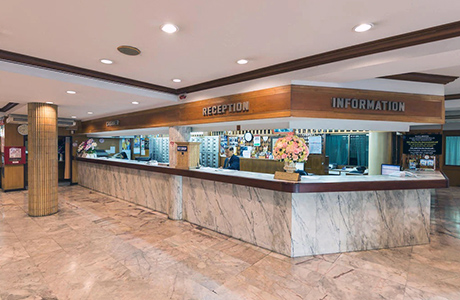
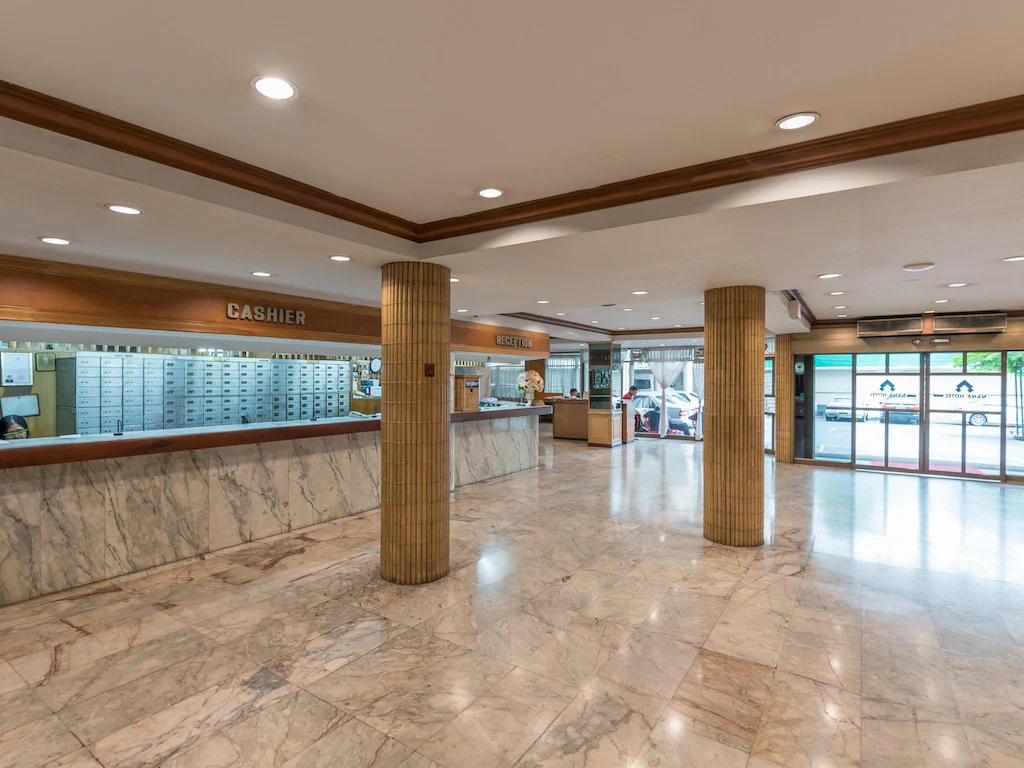
Note: Nana Hotel is difficult to describe as a normal hotel because, in my opinion, over time it has almost become a character in its own right within the neighborhood. It is part of Nana’s history, a place that has seen generations of tourists, expats, bar girls, eccentric characters, and every kind of nightlife crowd pass through its doors. Some people compare it to the bar from Star Wars and, after staying there myself, I have to admit I completely understand what they mean. The lobby is constantly full of people coming and going: hotel guests, visitors, girls, people heading up to the rooms, and various characters whose full backstory you are probably better off not knowing. In short, it is a huge crossroads of people. This becomes even more obvious on the second floor, where some rooms are also used as a kind of short-stay hotel. Naturally, this is not something you will find listed among the normal booking options on hotel websites, but it is something I personally observed during my stay and, apparently, it has long been part of the hotel’s unusual routine. There is a small reception desk on that floor where payment for this kind of room use is handled. Girls working in the Go Go Bars and other venues in the area are very familiar with the arrangement, and the result is a constant flow of girls and customers who are not staying at the hotel in the usual sense, but simply use the rooms for the time they need and then leave. For anyone who needs that kind of convenience, it is undoubtedly very practical. For regular hotel guests, on the other hand, it means accepting an environment that is even busier, more chaotic, and considerably more unconventional than usual.
Nana Hotel is old, noisy, a little absurd, and completely removed from the standardized atmosphere of a major international chain. The doors still use metal keys, you can hear practically everything from the rooms, the carpets and furnishings make no attempt to hide the passage of time, and the corridors are filled with a cast of characters that would probably be difficult to find anywhere else. At the same time, though, much of that is exactly what gives the place its charm. Step outside the entrance and Nana Plaza is right in front of you. Go up to the third floor and there is a surprisingly pleasant pool area where you can sit, have a cigarette, and relax for a few hours away from the chaos below. Most of all, you get the feeling that you are staying somewhere that, for better or worse, is genuinely part of the history of this corner of Bangkok.
Naturally, the hotel is 100% Guest Friendly, which is practically essential given its location and the close relationship the property has always had with the nightlife of the area. Personally, though, I see it as a hotel better suited to one or two nights rather than a long stay. For a short visit, the room’s shortcomings are easy enough to overlook: you live out of an open suitcase, leave valuables in the safety deposit boxes at reception, put up with the poor soundproofing, and make the most of the location above all.
If I were staying for a week or longer, though, the lack of proper storage space for clothes, the absence of an in-room safe in every room, the noise, the constant chaos, and the overall age of the property would definitely start to become more noticeable.
In short, Nana Hotel makes the most sense if your main interest is Nana Plaza and everything connected with the nightlife around Soi Nana. If, on the other hand, you simply want to stay in the same area without needing to sleep literally across the street from Nana Plaza, there are significantly better hotels nearby for only a little more money. One example is the Dynasty Grande on Soi 6, which is clearly superior in terms of overall quality while still being in a very central location. From there, Nana Plaza, Sukhumvit Road, the BTS, and practically everything else of interest in this part of the city are all within about a five-minute walk. So in the end, it mainly comes down to your priorities.
Personally, I find Nana Hotel more interesting for what it represents than for what it actually offers in practical terms. It is not simply a hotel across from Nana Plaza. It almost feels like an extension of it. It is an old, noisy, slightly improbable piece of Soi 4 history, clearly marked by the passage of time but still perfectly at home in the environment around it.
A kind of Star Wars bar with hotel rooms upstairs.
NANA HOTEL Bangkok is absolutely Guest Friendly – Check prices on Agoda.com